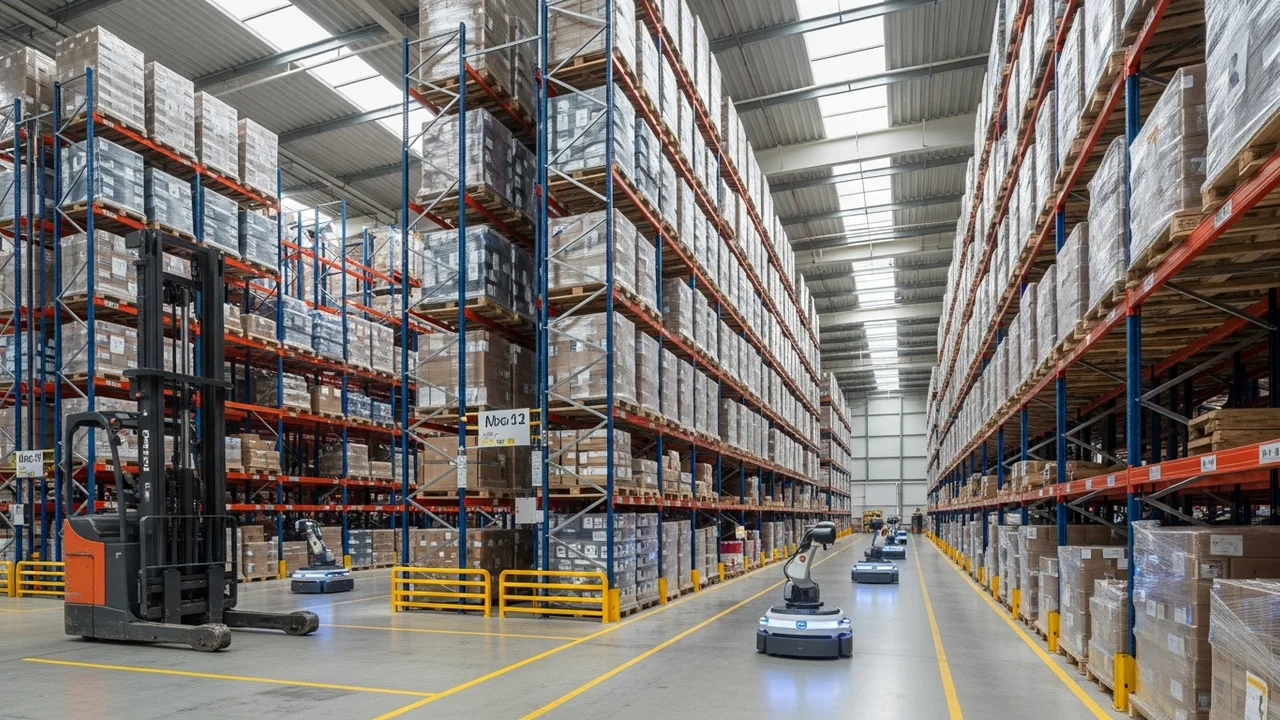
Every so often a single statistic reframes an entire industry. The latest comes from the UK Warehousing Association, whose new research suggests the sector employs far more people than the official figures have ever captured. It is a reminder that intralogistics, the business of moving, lifting and storing goods, is one of the largest and fastest growing parts of the economy. It is also, in our view, one of the very best places in the country to build a career in sales.

Rachel's take
I have spent my whole career around this industry and I still think it is the best kept secret in sales. Big deals, long relationships and customers who genuinely need what you sell. If you can sell here, you can sell anywhere.
Rachel Lunn, Founder, EvaraThe workforce is far bigger than the official count
Research carried out for the UK Warehousing Association by the logistics consultancy Aricia suggests that around 760,000 people work in warehousing across the UK. That is more than 70 per cent higher than the Office for National Statistics figure of roughly 440,000 for 2025. The gap exists because a great many warehousing and storage roles are recorded inside other sectors, from retail to manufacturing, and never counted as warehousing at all.
Even on the conservative official measure, warehousing employment has grown by 40 per cent since 2011, against 14 per cent for the wider economy. Whichever number you take, the direction of travel is the same. This is a large, expanding sector that the country has quietly come to depend on.
An economic engine, not a back office
Zoom out to the whole of logistics and the scale is striking. Logistics UK puts the sector's annual contribution at around £170 billion, with more than 8 per cent of the national workforce employed across it. Its own president has described logistics as a driver of growth and a barometer of economic efficiency rather than a background operation.
The intralogistics layer inside that, material handling, warehouse automation, storage and supply chain technology, is where a great deal of the investment now flows. The UK warehouse automation market alone is forecast to more than double over the coming decade, and the global intralogistics market, worth around 64 billion dollars in 2024, is expected to climb well beyond 100 billion by 2030. Growth on that scale needs people to sell it.
Why it is such a good industry for salespeople
Strip it back and intralogistics has almost everything a serious salesperson could want. The deals are substantial, because forklifts, racking, automation and fleet contracts are real capital purchases. The relationships are long, because customers keep buying, servicing and upgrading for years. And the selling is consultative, because you are solving an operational problem on a warehouse floor rather than pushing a commodity.
Add recurring aftermarket and service revenue, genuine technical depth to master, and customers in every region of the country, and you have a sector that rewards the people who take the time to understand it. Few industries combine deal value, repeat business and long term relationships quite the way this one does.
Demand for talent is only going one way
The same research carried a warning that doubles as an opportunity. Clare Bottle, chief executive of the UK Warehousing Association, says perceptions have not kept pace with the modern industry, and that too many people still picture cold, manual work rather than the career ladder the sector actually offers. She is clear that warehousing excels at both creating entry level opportunities and giving people a route to climb.
That perception gap, set against real growth, is exactly why commercial talent is in such demand. Logistics has remained one of the most resilient and opportunity rich parts of the jobs market, with vacancies rising through the first half of 2025 even as other sectors held back on hiring. For anyone weighing up where to build a sales career, scarcity of talent in a growing sector is about as good as the maths gets.
Founder, Evara
What this means for commercial teams
- The official workforce figures understate the real size of the sector, so commercial hiring should be planned against the true scale of demand rather than the headline count.
- Few sectors combine high deal values, recurring service revenue and long customer relationships the way intralogistics does, which makes it unusually rewarding for consultative salespeople.
- Commercial and sales leadership talent is scarce in a growing market, so the businesses and the candidates that move first tend to win.
This summary is based on the original announcements: Materials Handling & Logistics News · UK Warehousing Association and Savills, the size and make-up of the UK warehousing sector · Logistics UK, The Logistics Report 2025 · IMARC Group, UK warehouse automation market · Next Move Strategy Consulting, intralogistics market.